Pfeilstorch
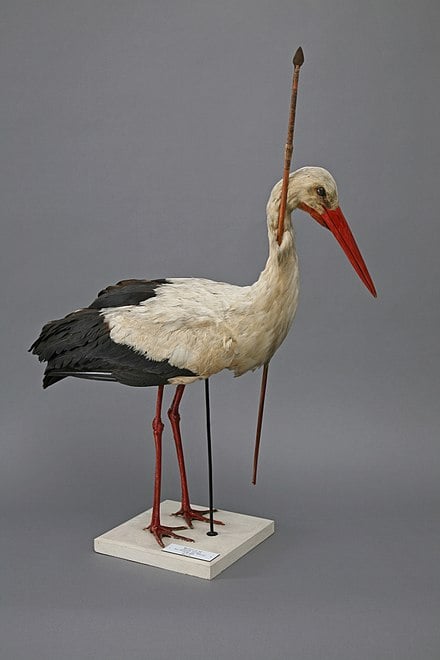
Migrating stork which has been hit by an arrow
The Rostocker Pfeilstorch, found in 1822, demonstrated that birds migrated rather than hibernating or changing form in winter.You might also enjoy: The Aswang in Psychological Warfare: A Fascinating Intersection of Mythology and Military Tactics
The term Pfeilstorch (German for ‘arrow stork’, pronounced [ˈpfaɪ̯l.ˌʃtɔɐ̯ç]; plural Pfeilstörche, [-ˌʃtœɐ̯.çə]) is given to storks injured by an arrow while wintering in Africa, before returning to Europe with the arrow stuck in their bodies. As of 2003, around 25 Pfeilstörche have been documented in Germany.You might also enjoy: Mel Gibson Originally Intended for The Passion of the Christ to Have No Subtitles Despite the Film Being Entirely in Latin.
The first and most famous Pfeilstorch was a white stork found in 1822 near the German village of Klütz, in the state of Mecklenburg-Vorpommern. It was carrying a 75-centimetre (30 in) spear from central Africa in its neck. The specimen was stuffed and … Continue Reading (2 minute read)